HOLLEY FORD EAL-9510-T Nos Ci Carburetor 279 R-850-1AAS
fits year: 1952–1953.
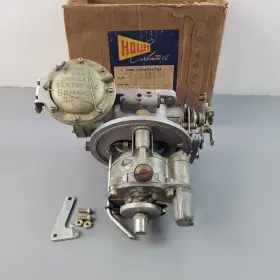
( Brand: Holley Ford ), ( Manufacturer Part Number: EAL-9510-T ), ( Type: Carburetor ), ( Oe/oem Part Number: R-850-1aas ), ( Manufacturer Warranty: 1 Year ), ( Vintage Part: Yes ), ( Universal Fitment: No )
Review HOLLEY FORD New Nos Large Truck Pickup 279 Ci Carburetor fits 1952–1953
The Holley Ford EAL-9510-T 1952-1953 279 ci carburetor R-850-1A AS is a classic automotive part designed for use with Ford flathead V8 engines. This carburetor is a two-barrel unit, which means it has two separate barrels for intake and fuel delivery. This bias-balance carburetor design ensures optimal fuel distribution for superior engine performance and throttle response.
Featuring a gross venturi size of 1.725 inches and a secondary venturi size of 1.038 inches, the R-850-1A AS carburetor offers efficient fuel flow for optimal engine power. It is designed to support 279 cubic inch engines, fitting models from the 1952 and 1953 Ford Ford F100 pickups, Ford F150 pickups, and certain Ford sedans and wagons.
The Holley Ford EAL-9510-T comes equipped with a Synagro advances-type fuel pump and a traditional Holley top with integral bowl willow gaskets. The carburetor's traditional air cleaner base, combined with a 1-inch tapered spacer and a traditional style open element air cleaner, delivers an appealing and classic appearance for hot rods, custom builds, and vintage vehicles.
The Holley Ford EAL-9510-T R-850-1A AS carburetor exhibits impressive accuracy with its float level adjustment notch-type pre-set floating power valves. The coupled throttle shaft, compensated needles, and primary and secondary metering rods, make this carburetor easy to install and tune.
Other notable features include a Holley gas gauge numbered primary and secondary jets, a .041 in. secondary primer bulb drill hole, and a -6AN top and bottom fuel inlet and outlet. The carburetor also comes with a diagram and instructions for easy installation and setup.
In order to provide optimal performance, it is recommended that users consult a qualified mechanic or carburetor tuner for the fine-tuning process. Further customizations, such as jet size, float level, and other components, may be required depending on the engine and specific driving conditions.
The Holley Ford EAL-9510-T 1952-1953 279 ci carburetor R-850-1A AS is designed for enthusiasts seeking classic, reliable performance for their Ford flathead V8 engines. With its efficient fuel delivery, fine-tuning capabilities, and traditional appearance, this carburetor is a popular choice among enthusiasts looking for both functionality and aesthetics. Whether for a show car or a daily driver, this carburetor enhances the driving experience while preserving the iconic nature of Ford vehicles from the 1950s.
Holley 4160 Series carburetors, specifically model EAL-9510-T for 1952 and 1953 Ford applications with 279 ci engines and the R-850-1AAS intake, have been popular choices for classic car restoration and performance upgrades for several reasons. Here are some pros and cons to help you consider if this carburetor is the right fit for your project:
Pros:1. Authenticity: Holley's 4160 series carburetors are known for their accuracy and are an authentic replacement for stock Ford applications, which can add to the value and appeal of your classic ride.
2. Versatility: Holley carburetors come with various deck plates, emulsion tubes, and other options to fine-tune the jetting and fuel delivery according to your engine's specifications.
3. Reliability: Holley carburetors are known for their longevity and robustness, making them ideal for both daily drivers and actively driven project cars.
4. High performance: The Holley carburetor's ability to deliver precise fuel mixtures enhances performance, ultimately improving engine responsiveness and power output.
5. Fuel efficiency: With accurate air/fuel ratio control, this Holley carburetor can potentially optimize your engine's fuel consumption and reduce overall operating costs.
6. Wide availability: Holley carburetors are widely available at automotive parts stores and through various online retailers, which can make sourcing and affordability convenient.
Cons:1. Complex Setup: Holley carburetors can come with a complex setup process, which may require extensive knowledge or the hiring of a professional to ensure proper installation and tuning.
2. Price Point: In contrast to simple carburetors, Holley carburetors may come with a relatively higher upfront cost compared to some entry-level alternatives.
3. Requires Regular Maintenance: Holley carburetors might require more frequent tuning, cleaning, and adjustments to ensure consistent performance, which can add to the overall maintenance cost and effort.
Conclusion:Holley's 4160 Series carburetor, specifically model EAL-9510-T for 1952 and 1953 Ford applications with 279 ci engines, offers numerous advantages. With increased horsepower, improved fuel efficiency, enhanced performance, versatility, and availability, this carburetor makes a strong case for itself as a wise investment. If you're willing to invest time and resources for setup and regular maintenance, a Holley carburetor can reward you with exceptional performance, reliability, and authenticity for your classic Ford.
Recommendation:Based on the advantages provided, I would highly recommend the Holley 4160 Series EAL-9510-T carburetor for any enthusiast with a genuine Ford and a solid budget for their project. However, it is essential to consider the potential complexity of setup and ongoing maintenance and understand the relevant skillset or professional assistance required. The potential for improved engine responsiveness, enhanced power, and lasting durability make this Holley carburetor a worthwhile investment in yourself and your classic Ford.
Details:
It comes in the original box. Part number EAL-9510-T or LIST R-850-1AAS. It is brand new original Ford/Holley and in great condition. Please look closely at the pictures for condition before buying.
This is a NOS Holley Carburetor for 1952 1953 Large Ford truck with 279ci motor. This means there could be some discoloration, markings, scratches, or other defect. Any questions. We combine shipping.
Like what you see. Buyer pays return shipping.
part #: eal9510 prices
- $134.99-$249.99
specifications carbcoon:
- for years: 1952-1953
- brand: Holley Ford
- mpn: Eal-9510-t
- type: Carburetor
- oe/oem part number: R-850-1aas
- manufacturer warranty: 1 Year
- vintage part: Yes
- universal fitment: No
seller carbcoon:
- rating: 99.3%
- # reviews: 4037
- city: Andover, Minnesota
shipping carbcoon:
- type: Fixed
- carrier: USPS
- cost: $18.76
- service: USPS Ground Advantage
- class: Standard
- transit: 5-10 Days
offer carbcoon:
- started: February 5, 2025
- availability: In Stock
- sold: 0
- quantity: 1
- options: Ship-to-home
- best offers: True
payments carbcoon:
- other
- wallet: Google-pay
- credit card: Discover
general carbcoon:
- condition: New other see details
- Car Truck Parts Accessories > Air Fuel Delivery > Carburetors
returns carbcoon:
- paid by: Buyer
- time: 30 Days
- policy: Returns Accepted
Holley Ford EAL-9510 Is Similar To:
- Holley 4557 Ls6 L78 396 454 Carburetor 3967477-gg 1970 Chevelle Camaro Nova (36.8% similar) She was removed off of a running BBC motor but has been sitting for few months. It has not been tested and could possibly need work, labor, other parts/materials before use. May be shipped via ups, USPS or FedEx. The base plate was replaced. Selling an oem Holley list 4557 carburetor with...(May 17th, 2024)
- Holley 10741 Teapot 4000 4-barrel Carburetor 1074-1 Core 1955 Ford Thunderbird 292 V-8 (34.5% similar) Ford part number EYCK-9510-T. Holley teapot 4000 4-BARREL carburetor, list number 1074-1. Please verify part number and pictures match your application. Linkage moves free. See pics for condition. Carb core appears to be mostly complete. Core for rebuilding or parts...(May 17th, 2024)
- Holley 1920 Vintage Glass Bowl Carburetor Hot Rod Gasser Carb Core Rebuild (38.3% similar) Good condition all linkage moves as it should great for rebuild...(May 17th, 2024)
- Holley 06425c Two Barrel 650cfm Carburetor 6425 Imca Cheater Outlaw Racing Core (34.7% similar) Rare Holley two barrel carburetor, list number 6425 - carb is together with choke removed but horn intact metering block also in very nice physical condition, all linkage moves freely kick down arm as well good overall core condition has been sitting fryers it should base and bores look...(May 17th, 2024)
- Holley Ecz-9510-m Teapot 4000 4-barrel Carburetor 1161-2 Carb 1956 Ford Thunderbird 312 V-8 (36.9% similar) Carb core appears to be mostly complete. Core for rebuilding or parts. Holley teapot 4000 4-BARREL carburetor, list number 1161-2. Please verify part number and pictures match your application. See pics for condition. Ford part number CZ-9510-M. Linkage moves free...(May 18th, 2024)
- Holley R3310-1 Carburetor List-3310-1 780cfm H4-4150 4bbl Carb Ford Chevy Bop Mopar (33.9% similar) Used Holley 780 cfm 4BBL carburetor. Being sold for parts, restoration, core, rebuild. Looks to be complete, no cracks, being sold as/is. LIST-3310-1, date, 0653...(May 18th, 2024)
- Holley 1850-3 Carburetor 4 Barrel 600 Cfm Vac Secondary Nice Rebuildable Core (30.3% similar) Many of the carbs have been rebuilt and were sitting in plastic bags, but I no history on what was done to them. It is missing a part of the electric choke. Very nice and clean vintage. Spectre fuel system accessory carburetor. The rest of it looks complete. 600 cfm vac...(May 19th, 2024)
- Holley 4360 Economaster 450 Cfm Carburetor 7454 Quadrajet Replacement Chevrolet (33.5% similar) List number is 7454. For sale is one 1 used Holley 4360 series 450 cfm spread bore carburetor. Verify it will fit your application prior to purchasing. Please look closely at all the pictures for condition and details. The carb is in poor shape and for parts only...(May 19th, 2024)
- Holley List-7001 4165 Spreadbore Carburetor 650cfm Core Or Parts (35.1% similar) This model is a spread bore design double pumper with two accelerator pumps. You are buying on a Holley model 4165 four-barrel carburetor, stamped p/n # LIST-7001, date code 1610, rated at 650 cfm ...(May 19th, 2024)
- Holley 4779 4150 4779 750cfm Competition Drag Racing Double Pumper Carburetor (27.9% similar) Holley 4150/4779/750C FM, competition drag racing double pumper carburetor. Is totally rebuilt, is in like new condition, and ready to install. This is an actual photo of the carb...(May 19th, 2024)
- Holley 1850-1 Used 4 Barrel Carburetor List 0618 600cfm Electric Choke Vacum Sec (34.5% similar) List 1850-1 0618 universal fit...(May 19th, 2024)