CARTER AS4D Carburetor 1-BARREL 6-CYLINDER
fits make: Studebaker. year: 1959–1962.
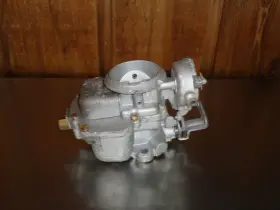
( Brand: Carter ), ( Manufacturer Part Number: AS4D ), ( Type: Carburetor )
Review CARTER As 1-barrel Carburetor Studebaker Six 6-cylinder fits 1959–1962
The Carter AFB 1-barrel carburetor was originally designed for use on the six-cylinder engines found in Studebaker vehicles from 1959 to 1962. This particular carburetor model, the AFB, is known for its advanced design and excellent performance. The Carter AFB utilizes a single barrel with a unique air horn design, which helps to improve engine idling, acceleration, and overall fuel efficiency.
The Carter AFB carburetor is characterized by its rounded, cylindrical shape with a flat top. It has a gross size of approximately 2.2 inches in height and 4 inches in overall diameter. The carburetor features a perfectly calibrated pilot circuit, which ensures stable idling and easy starting, even in cold weather conditions. For optimal power delivery, the main circuit of the AFB is equipped with a regular-bore, full-radius, tapered venturi.
The primary fuel metering system of this carburetor consists of four fuel nozzles, located beneath the main jet, which can be easily accessed by removing the top of the carburetor. These nozzles ensure proper fuel delivery, which is crucial for a smooth and powerful engine performance. Additionally, the airbleed mechanism integrated into the Carter AFB helps to eliminate surges and vibrations.
The choke system of the AFB carburetor is designed to ensure efficient cold starting. When engaged, it fully blocks off the fuel passage, allowing a richer fuel mixture to be provided, which aids in a quick and easy start. The choke can be operated using a lever located on the side of the carburetor or through the use of a vacuum-operated system.
Other notable features of the Carter AFB 1-barrel carburetor include its fuel path design, which incorporates a primary and secondary float bowl with a displacement capacity of about 1.3 quarts, and a secondary jet which aids in providing a fuel-rich mixture during acceleration. To maintain proper ventilation and combustion, the carburetor is also equipped with an air cleaner mounting plate, which ensures a good airflow into the engine.
Installing the Carter AFB 1-barrel carburetor onto a Studebaker six-cylinder engine requires the use of appropriate mounting hardware and proper synchro-mesh linkage for the throttle and chokeoperations. Proper adjustments and calibration of this carburetor are crucial for optimal performance and reliable operation. Proper tuning can be achieved by following the manufacturer's instructions, or enlisting the help of a professional mechanic.
Overall, the Carter AFB 1-barrel carburetor designed for the 1959 to 1961 Studebaker six-cylinder engines offers excellent performance characteristics such as improved idle stability, easy acceleration, and high fuel efficiency. With its advanced design and practical features, this carburetor has been a reliable choice for Studebaker enthusiasts for many years.
The Carter AFB 1-barrel carburetor was a popular choice for 1959 to 1962 Studebaker 6-cylinder engines. Here are some pros and cons of buying and using this carburetor for your vehicle. remember that I don't have the ability to feel or use emojis.
Pros:1. Availability: Carter AFB carburetors are widely available in the aftermarket, making it relatively easy to find replacement parts or a rebuilt unit.
2. Simplicity: Being a 1-barrel carburetor, it is generally less complex in design compared to its 2-barrel or 4-barrel counterparts, making it easier to tune and maintain.
3. Cost-effective: These carburetors are usually more affordable than more modern or powerful carbs, making them an attractive option for those on a budget.
4. Standard Equipment: The Carter AFB 1-barrel carburetor was originally used on Studebaker engines during this time period, ensuring compatibility and ease of installation.
Cons:1. Performance: The 1-barrel carburetor may not provide the same performance as a more modern 2-barrel or 4-barrel carburetor in terms of fuel efficiency and throttle response.
2. Vacuum Secondary: This particular carburetor design uses vacuum secondary, which might require additional diagnosis and tuning to deliver optimal performance.
3. Aging: The carbon buildup and degradation of internal components due to age may impact the performance and longevity of these carburetors.
Conclusion:The Carter AFB 1-barrel carburetor for 1959 to 1962 Studebaker 6-cylinder engines can be a cost-effective and accessible solution for those looking to replace a worn-out carburetor or are working on a cheap project vehicle. However, it may not offer the same level of performance as more modern carburetors and require additional tuning to operate efficiently. Proper maintenance and an understanding of the vacuum secondary design are important in ensuring the best possible performance from this carburetor.
Details:
See pics for condition. Core for rebuilding or parts. Carter AS 1-barrel carburetor, no ID tag or stamp number. Linkage moves free.
Throttle bore measures 1-1/2 and mounting bolt holes to measure 2-5/8.
part #: as4d prices
- $399.99-$549.95
specifications carbcoon:
- for makes: Studebaker
- for years: 1959-1962
- brand: Carter
- mpn: As4d
- type: Carburetor
seller carbcoon:
- rating: 99.9%
- # reviews: 29182
- city: Sheboygan Falls, Wisconsin
offer carbcoon:
- options: Ship-to-home
- sold: 0
- availability: In Stock
- started: December 26, 2024
- quantity: 1
- best offers: True
shipping carbcoon:
- carrier: USPS
- cost: $0.00
- type: Calculated
- service: USPS Ground Advantage
- transit: 4-11 Days
- class: Standard
general carbcoon:
- condition: For parts or not working
- Car Truck Parts Accessories > Air Fuel Delivery > Carburetors
returns carbcoon:
- paid by: Buyer
- policy: Returns Accepted
- time: 30 Days
payments carbcoon:
- wallet: Paypal
- other
- credit card: Mastercard
Carter AS4D Is Similar To:
- Rochester Carter 7042206 1972 Chevy Gmc Truck 402 454 Carburetor Carb Quadrajet (35.2% similar) This is a Chevy 402/454 q-jet carb 7042206 the stamped number. It moves freely and looks pretty good but may need rebuilding from sitting...(May 17th, 2024)
- Carter 2441sa Afb Carburetor 2441s 1957 Ford Mercury 312 Engine Ecz (49% similar) The carter AFB 2441-SA was used on the 1957 ford 312 some passenger cars and station wagons. These are little known carburetors and good to use on the y-block engines. And the accelerator pump and dash pot plunger are both...(May 17th, 2024)
- Dodge Chrysler Carter 3108s 1961 Imperial 413 Marine Afb Carburetor 4 Barrel (37.2% similar) Carter AFB carburetor stamped 3108S dated b1 - appears factory for a 1961 Chrysler imperial /dodge marine/boat with 413 cu.in.engine primary and secondary throttle blades move freely air horn castings 6-1476 main body fuel bowl casting is 0-1377 all linkage moves fine removed from storage shelf...(May 17th, 2024)
- Carter 9605s Afb Competition Series 600 Cfm Carburetor 9605s (36.9% similar) Its in good condition just a little dusty from sitting for 30 years. It should be cleaned and gone through. It had very little use from new...(May 18th, 2024)
- Carter Ct109-31 Carburetor Tool Ct-109-31 Service 3 16 (49.3% similar) Part #: Carter CT109-31 for sale...(May 18th, 2024)
- Carter Rx-0 Vintage Used 1924-1929 Chevy Carburetor Original Core Rebuild Car (38.2% similar) Choke is free, throttle shaft/butterfly stuck. Carter Rx-o carburetor for 1925-27 Chevrolet, online list shows the as being used on 1925, 1926, 1927 good carburetor rebuilding...(May 19th, 2024)
- Carter C-rjh-08 1929 1930 1931 Chevrolet Gm Chevy Up-draft Carburetor Vintage (33.1% similar) Application 1929 1930 1931 Chevrolet gm Chevy CARTER-RH-08 up-draft carburetor vintage. Keywords coupe sedan...(May 19th, 2024)
- Carter 413-s Vintage Wa-1 Single Barrel Carburetor Mechanical Choke Studebaker (50.6% similar) Linkage moves freely. Choke plate and throttle move freely as well. Looks to have been used. Would need to be serviced before putting into service...(May 19th, 2024)
- Carter E6k4 Ball And Carburetor 1935-1940 Chrysler Desoto 1 Brl Used (45.3% similar) It comes from my late grandfathers small rebuilds business. Selling as used. Note the broken fuel line connector. Fits: 1935-40 Chrysler and deist. Carter E6K4 ball carburetor 1935-1940 Chrysler deist 1 Burl - used. It is safe to say that this part has been sitting on a shelf for many...(May 19th, 2024)
- Carter 4028sa 1966 Chevy Chevelle Nova Corvette 327 275hp Carburetor Il9044 (33.5% similar) The 4028SA carburetor is a great addition to any classic car enthusiasts collection. It comes with no items included and has OE/oem part number. This vintage Carter carburetor is perfect for your 1966 Chevy Chevalier, nova, or corvette. It also has a barrel count of 4 and is universal fitment...(May 20th, 2024)
- Carter 1a4055s Afb 4-barrel Carburetor Carb Core 4055s E6b 1966 Buick 340 V-8 (47.1% similar) See pics for condition. Carter AFB 4-BARREL carburetor, stamp number 4055S with date code E6B. Core for rebuilding or parts. On throttle blade screw is broke off in shaft. Linkage moves free. Please verify part number and pics match your application...(May 21st, 2024)