CARTER BUICK GM 2837S Carburetor Rebuild 2BBL
fits year: 1955–1960.
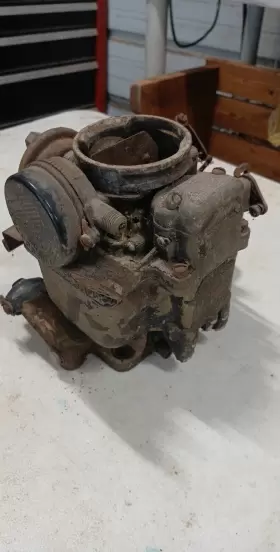
( Brand: Carter Buick Gm ), ( Manufacturer Part Number: 2837S ), ( Choke Type: Mechanical ), ( Type: Carburetor ), ( Manufacturer Warranty: No Warranty ), ( Oe/oem Part Number: Tag Date Code H85 ), ( Material: Aluminum, Steel ), ( Features: Down Draft ), ( Country/region Of Manufacture: United States ), ( Vintage Part: Yes )
Review CARTER BUICK GM Carburetor Parts Rebuild fits 1955–1960
The Carter AFB 2BBL Carburetor, model 2837S, is a classic automotive component that has been a staple in the automotive industry since the 1950s. This particular carburetor was manufactured by Carter, a renowned name in the field of automotive fuel systems, and was specifically designed for use in Buick vehicles from the years 1955 to 1960.
The Carter 2BBL 2837S Carburetor is a two-barrel carburetor, which means it has two separate barrels for fuel intake. This design allows for a more efficient fuel-air mixture, thereby improving the engine's performance. The carburetor features a primary and secondary venturi, which help in controlling the air-fuel mixture according to the engine's needs.
The 2837S model is known for its robust construction and reliable performance. It is made from high-quality materials, including brass and steel, which ensure durability and resistance to corrosion. The carburetor features a float bowl with a capacity of around 12 ounces, which allows for a sufficient fuel supply to the engine.
The carburetor is equipped with a vacuum secondary, which helps in improving the engine's performance at higher RPMs. It also features an accelerator pump, which provides an additional fuel boost during acceleration, ensuring smooth power delivery. The carburetor is adjustable, allowing for fine-tuning of the air-fuel mixture for optimal engine performance.
Rebuilding the Carter 2BBL 2837S Carburetor is a straightforward process, thanks to its modular design. The carburetor can be disassembled into several parts, making it easy to inspect and replace worn-out components. The kit includes all the necessary parts for a complete rebuild, including gaskets, jets, floats, and needles.
In conclusion, the Carter AFB 2BBL Carburetor, model 2837S, is a reliable and efficient fuel delivery system that has stood the test of time. Its robust construction, reliable performance, and ease of rebuild make it a popular choice among classic car enthusiasts and restorers. Whether you're looking to restore a classic Buick or simply want to improve your vehicle's performance, the Carter 2BBL 2837S Carburetor is a worthy investment.
Pros of buying a Carter BUICK GM 2837S 1955-1960 2bbl carburetor for rebuild:1. Authenticity: This carburetor is an original part for Buick vehicles from the 1950s, ensuring it fits perfectly and is compatible with the engine.
2. Durability: With proper maintenance and rebuild, this carburetor can last for many years, making it a cost-effective solution in the long run.
3. Availability: The 2837S is a common variant, making it relatively easy to find replacement parts and resources for rebuilding.
Cons of buying a Carter BUICK GM 2837S 1955-1960 2bbl carburetor for rebuild:1. Technical difficulty: Older carburetors can be complex to rebuild, requiring specific tools, parts, and skills. This may pose a challenge for those without mechanical expertise.
2. Age-related issues: Being an older part, the carburetor may have age-related issues such as corrosion, wear and tear, or seals that have degraded over time.
3. Cost: While cost-effective in the long run, the upfront cost of buying and rebuilding an older carburetor can be significant, including the cost of parts, tools, and the time spent on the rebuild.
Conclusion:If you are a car enthusiast with mechanical skills and experience in rebuilding carburetors, purchasing a Carter BUICK GM 2837S 1955-1960 2bbl carburetor for rebuild can be a cost-effective solution to restore the performance of your classic Buick vehicle. However, if you lack the necessary skills or tools, or if you value your time, it might be more convenient to seek out a professional rebuild service or consider purchasing a new or refurbished carburetor.
Details:
part #: 2837s prices
- $30.00-$87.99
specifications carbcoon:
- for years: 1955-1960
- brand: Carter Buick Gm
- mpn: 2837s
- choke type: Mechanical
- type: Carburetor
- manufacturer warranty: No Warranty
- oe/oem part number: Tag Date Code H85
- material: Aluminum, Steel
- features: Down Draft
- country/region of manufacture: United States
- vintage part: Yes
seller carbcoon:
- rating: 100.0%
- # reviews: 109
- city: Cascade, Maryland
returns carbcoon:
- policy: No Returns
general carbcoon:
- Car Truck Parts Accessories > Air Fuel Delivery > Carburetors
- condition: Used
shipping carbcoon:
- type: Calculated
- class: Expedited
- carrier: USPS
- transit: 7-12 Days
- cost: $0.00
- service: USPS Priority Mail
offer carbcoon:
- started: June 21, 2024
- availability: In Stock
- sold: 0
- options: Ship-to-home
- quantity: 1
- best offers: True
payments carbcoon:
- credit card: American-express
- wallet: Apple-pay
Carter Buick Gm 2837S Is Similar To:
- Rochester Carter 7042206 1972 Chevy Gmc Truck 402 454 Carburetor Carb Quadrajet (41.4% similar) This is a Chevy 402/454 q-jet carb 7042206 the stamped number. It moves freely and looks pretty good but may need rebuilding from sitting...(May 17th, 2024)
- Carter 2441sa Afb Carburetor 2441s 1957 Ford Mercury 312 Engine Ecz (39.1% similar) The carter AFB 2441-SA was used on the 1957 ford 312 some passenger cars and station wagons. These are little known carburetors and good to use on the y-block engines. And the accelerator pump and dash pot plunger are both...(May 17th, 2024)
- Dodge Chrysler Carter 3108s 1961 Imperial 413 Marine Afb Carburetor 4 Barrel (43.8% similar) Carter AFB carburetor stamped 3108S dated b1 - appears factory for a 1961 Chrysler imperial /dodge marine/boat with 413 cu.in.engine primary and secondary throttle blades move freely air horn castings 6-1476 main body fuel bowl casting is 0-1377 all linkage moves fine removed from storage shelf...(May 17th, 2024)
- Carter 9605s Afb Competition Series 600 Cfm Carburetor 9605s (37.7% similar) Its in good condition just a little dusty from sitting for 30 years. It should be cleaned and gone through. It had very little use from new...(May 18th, 2024)
- Carter Ct109-31 Carburetor Tool Ct-109-31 Service 3 16 (47% similar) Part #: Carter CT109-31 for sale...(May 18th, 2024)
- Carter Rx-0 Vintage Used 1924-1929 Chevy Carburetor Original Core Rebuild Car (56.5% similar) Choke is free, throttle shaft/butterfly stuck. Carter Rx-o carburetor for 1925-27 Chevrolet, online list shows the as being used on 1925, 1926, 1927 good carburetor rebuilding...(May 19th, 2024)
- Carter C-rjh-08 1929 1930 1931 Chevrolet Gm Chevy Up-draft Carburetor Vintage (37.7% similar) Application 1929 1930 1931 Chevrolet Gm Chevy CARTER-RH-08 up-draft carburetor vintage. Keywords coupe sedan...(May 19th, 2024)
- Carter 413-s Vintage Wa-1 Single Barrel Carburetor Mechanical Choke Studebaker (41.7% similar) Linkage moves freely. Choke plate and throttle move freely as well. Looks to have been used. Would need to be serviced before putting into service...(May 19th, 2024)
- Carter E6k4 Ball And Carburetor 1935-1940 Chrysler Desoto 1 Brl Used (38.2% similar) It comes from my late grandfathers small rebuilds business. Selling as used. Note the broken fuel line connector. Fits: 1935-40 Chrysler and deist. Carter E6K4 ball carburetor 1935-1940 Chrysler deist 1 Burl - used. It is safe to say that this part has been sitting on a shelf for many...(May 19th, 2024)
- Carter 4028sa 1966 Chevy Chevelle Nova Corvette 327 275hp Carburetor Il9044 (39.7% similar) The 4028SA carburetor is a great addition to any classic car enthusiasts collection. It comes with no items included and has oe/oem part number. This vintage Carter carburetor is perfect for your 1966 Chevy Chevalier, nova, or corvette. It also has a barrel count of 4 and is universal fitment...(May 20th, 2024)
- Carter 1a4055s Afb 4-barrel Carburetor Carb Core 4055s E6b 1966 Buick 340 V-8 (43.5% similar) See pics for condition. Carter AFB 4-BARREL carburetor, stamp number 4055S with date code E6B. Core for rebuilding or parts. On throttle blade screw is broke off in shaft. Linkage moves free. Please verify part number and pics match your application...(May 21st, 2024)